



Forest monitoring in Italy: AI and new technologies to protect forest health
From Val Brembana, four interconnected modules transform signals from trees into data and, day after day, build a digital memory of the Alpine forests

Four modules track what's happening in the forest, from the ground to the cloud. From soil moisture to the presence of beetles: forest monitoring takes shape as an interconnected ecosystem, designed to collect real-time signals that periodic surveys might otherwise miss.
This isn't merely some far-off future dream, but an avant-garde present-day reality for environmental protection, which is becoming more tech-driven thanks to an Italian startup. The idea of improving this process came about after Storm Vaia, which devastated numerous mountain areas, demonstrating the fragility of Alpine ecosystems.
The forest becomes a system to be listened to
The Made in Italy invention that combines product design, sensors, and artificial intelligence was born from discussions with forestry technicians. Droughts, invasive insects and harsh alpine conditions reveal a disconnect: nature is changing rapidly, yet many observation tools remain manual, incomplete, or primarily designed for research.
Italy's response to these transformations is a coordinated ecosystem of technologies designed to withstand the outdoors. Soil, microclimate, trees, and insects all feed into the same flow of information, which is then presented through an interface inspired by the clarity of agricultural tools. This ability to bring together form, function, and knowledge of the land is a modern manifestation of Made in Italy.
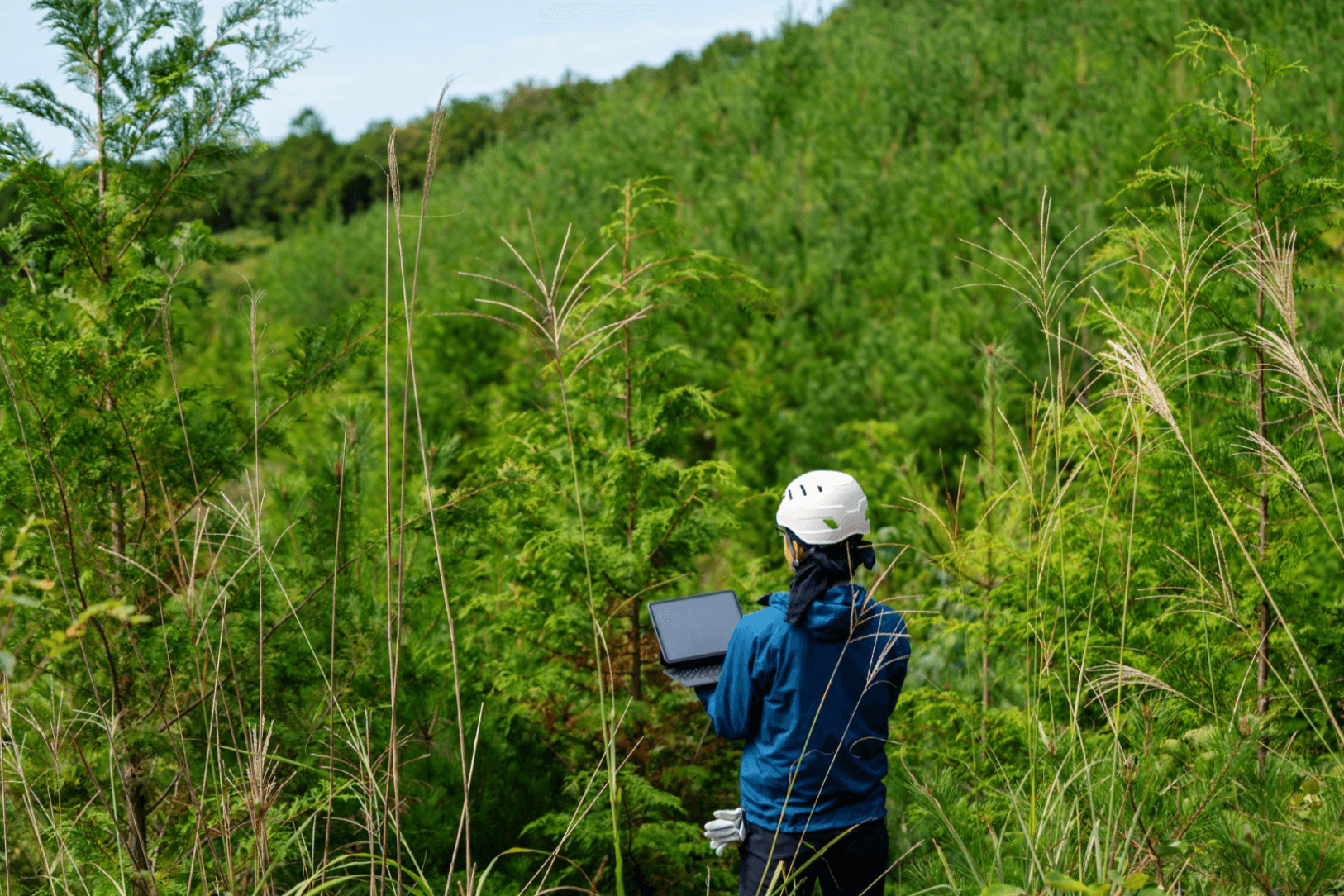
From the forest to the cloud: data collection is automated
Listening to the forest is thus accomplished with four specialized devices. TERRAE, placed at the base of the trees, measures soil moisture, temperature, and sunlight. It is connected to ABES, a trap equipped with an optical sensor that detects the presence of beetles in real time. On the trunk, FOMES records tree growth and movement, detecting even the slightest changes. Finally, GIBBA collects the readings and transfers them to the cloud via the LoRaWAN network.
The data is aggregated in a dashboard designed to monitor the forest, tree by tree. The automated collection stores the historical data and makes it possible to compare information that, when viewed separately, would provide an incomplete picture. This combination thus bridges the gap between complex solutions intended for research and manual tools that lack continuous data.
Made-in-Italy AI for monitoring Alpine ecosystems
The sensor network, however, goes beyond mere measurements. Each measurement feeds a digital twin designed to update itself day after day, reflecting the forest's evolution. By expanding the historical database, the goal is to make the model progressively more accurate and help technicians identify potential risk situations earlier.
It is in this step that artificial intelligence meets forest management: it connects data from the soil, the microclimate, the trees, and the insects, without replacing the experience of those who know the land. As reported by Repubblica, field measurements are also supplemented by information obtained from satellite imagery to identify infestations, water stress, and other signs of degradation. This technology thus gives a broader view of the overall picture, while leaving intervention assessment in the hands of the technicians.

From the James Dyson Award to field tests in the woods
This combination of technologies designed to protect the environment has attracted considerable interest, so much so that, in 2025, the invention was selected as the national winner of the James Dyson Award. The award brought attention to a process forged through field tests, which began with Arduino sensors, 3D-printed housings, and interim solutions. Initial tests yielded useful data, but also revealed issues with water leaks, short battery life, and weak LoRaWAN connections, especially in the densest parts of the forest.
To overcome these obstacles, the choice was simple, and exemplifies a hallmark of Made in Italy innovations. Through collaboration with forestry technicians monitoring the forests every day, the trap design, housing impermeability, and communication between the modules were revised to better meet objective requirements. The trial in the province of Bergamo, conducted with the aid of the Valle Averara Forestry Consortium, brought rain levels, vegetation density, battery life, and signal quality into the design process. This effort to achieve excellence showcases Italy's ability to transform regional expertise and applied research into concrete solutions.
Why forest monitoring matters for climate resilience
A forest doesn't change through a single, obvious signal. Changes in the soil, the microclimate, and tree movement become meaningful when they are observed in aggregate and tracked over time. This continuity also makes it possible to link information collected at different times, building an ecosystem history that complements the technicians' experience and makes it easier to discern changes that would otherwise be difficult to detect individually.
This is where continuous monitoring can provide technicians and consortia with a more timely foundation for guiding inspections, checks, and interventions. Behind the forest's apparent stability, delicate and constantly evolving balances coexist. Upcoming developments are therefore aimed at making the hardware more reliable for prolonged outdoor use as well as making the dashboard accessible to consortia, companies, and citizens. This technology thus becomes a tool for understanding and protecting forests, drawing attention back to living environments that are inextricably tied to regional identity, culture, and traditions.
Cross-border Italian sustainability with OppotunItaly
Italian ingenuity is evident in the sensors that transform signals from the forest into knowledge: know-how that combines traditional stewardship of the land with the possibilities offered by design, sensor technology, and artificial intelligence. It is a Made in Italy concept, in which expertise rooted in local contexts becomes solutions open to the future. OpportunItaly promotes Italian companies that, day in and day out, work to protect our environment. Targeted services such as the Buyers Club are available for buyers and foreign companies, designed to foster strategic connections with key players in the Made in Italy sustainability supply chain.Join the program today to discover all of the industry's key companies.
Sources
James Dyson Award
IED
Repubblica Green&Blue
In summary
An Italian startup has started monitoring forest health using AI, data analysis, and smart sensors.
There are four sensors: TERRAE, which measures soil moisture, temperature, and sunlight; ABES, which detects beetles using an optical sensor; FOMES, which tracks tree growth and movement; and GIBBA, which transfers data to the cloud via LoRaWAN.
The measurements feed into a dashboard and a digital twin that are continuously updated.
Predictive capability is a development goal supported by the continuous collection of data.
FAQ