



Monica Gori: the Italian scientist who changed the perception of the world
Throughout her career, Made in Italy artisanal know-how has merged with scientific research, making it possible to create devices capable of helping children with disabilities
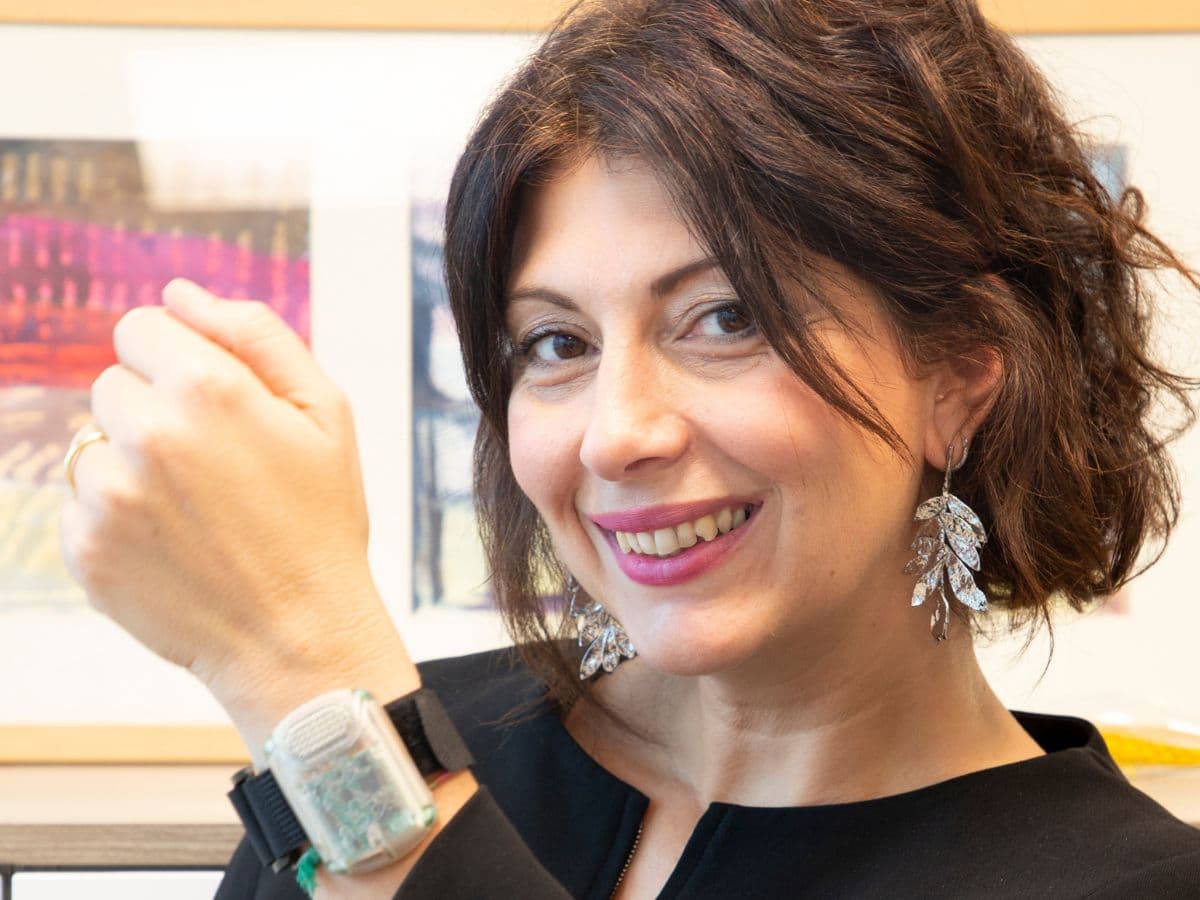
A sound can become space, a vibration can indicate a direction, a luminous grip can turn a rehabilitation exercise into a natural movement. It is in this transition, where research enters people’s lives, that the work of Monica Gori is situated: neuroscientist at the Italian Institute of Technology in Genoa and head of the U-VIP unit, the Unit for Visually Impaired People at IIT in Genoa. Her story brings together neuroscience, developmental psychology, engineering and assistive technologies, but it also tells of an Italian way of innovating: observing a human need, studying it rigorously and transforming it into tools capable of improving people’s lives.
Who is Monica Gori?
Monica Gori’s journey began far from the laboratory. As she explained in an interview, she grew up in Arezzo, attended an art school and studied goldsmithing, drawing, sculpture and painting. She learned to work with her hands and give shape to objects born from her intuitions. Later, this experience would become part of her approach to research: not stopping at the idea, but bringing it into a concrete form. It is a tension between thought and matter that runs through many stories of Italian excellence, as also shown by the career of Gio Ponti and Milanese design around the world.
The turning point came with psychology and the study of perception. At the CNR in Pisa, she encountered research on visual perception and understood that the senses are the way in which a person builds their relationship with space. Her PhD in humanoid technologies at IIT then allowed her to combine experimental psychology, brain studies and technological design. From this intersection emerged a recognisable scientific path: since 2002, Gori has worked on sensory deficits, expanding her field of research to all disabilities.
What happens to the brain when a sense is missing?
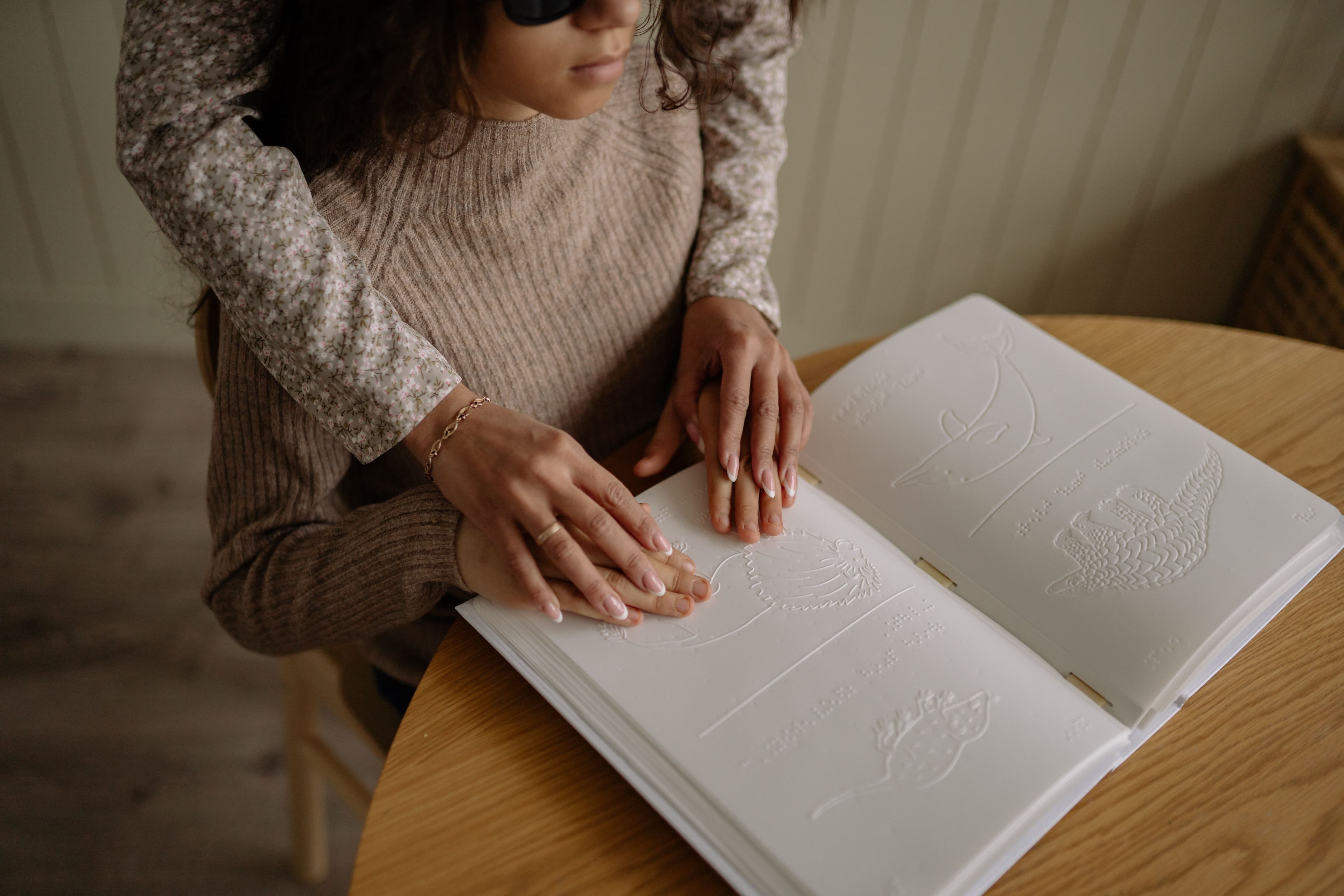
To understand the value of her work, we need to start with a question that is only apparently simple: how does the brain evolve when a sense is missing? For a long time, it was thought that, in the absence of sight, the other senses would automatically become stronger. The research carried out by Monica Gori and her team points in the opposite direction, showing that when one sense is missing, the others do not become more effective on their own.
In some cases, they follow different developmental trajectories, because in the early years sight acts as a kind of coordinator. When this reference is missing from birth, even the simplest actions, such as reaching for an object, can require a more complex process.
This is where neuroscience becomes a practical guide. As described by Frontiers in Psychology, her study on the iReach device moves in this direction: early intervention means offering tools to explore and interact when brain plasticity is still high.
The neuroscience behind the method
Gori’s method is based on a precise balance: on one side, research into the brain; on the other, attention to the person who will actually use that technology. An assistive solution cannot simply work in a laboratory. It must be understandable, adoptable and able to become part of a daily routine without creating distance.
For this reason, the multisensory technology developed by her team does not aim to accumulate stimuli, but to select essential signals. A sound, a vibration or a change in intensity can become learning tools if they are designed starting from what the brain is able to interpret. The goal is not to replace sight with an artificial code, but to guide the child towards a more stable perception of the body and space.
This attention translates into user-centred design. Doctors, therapists, families and children take part in development and evaluation, because useful technology must also be tested in real life. This choice reduces the risk of creating promising prototypes that are rarely used, and directs innovation towards concrete needs.
Italian know-how brings technologies from the laboratory to the real world
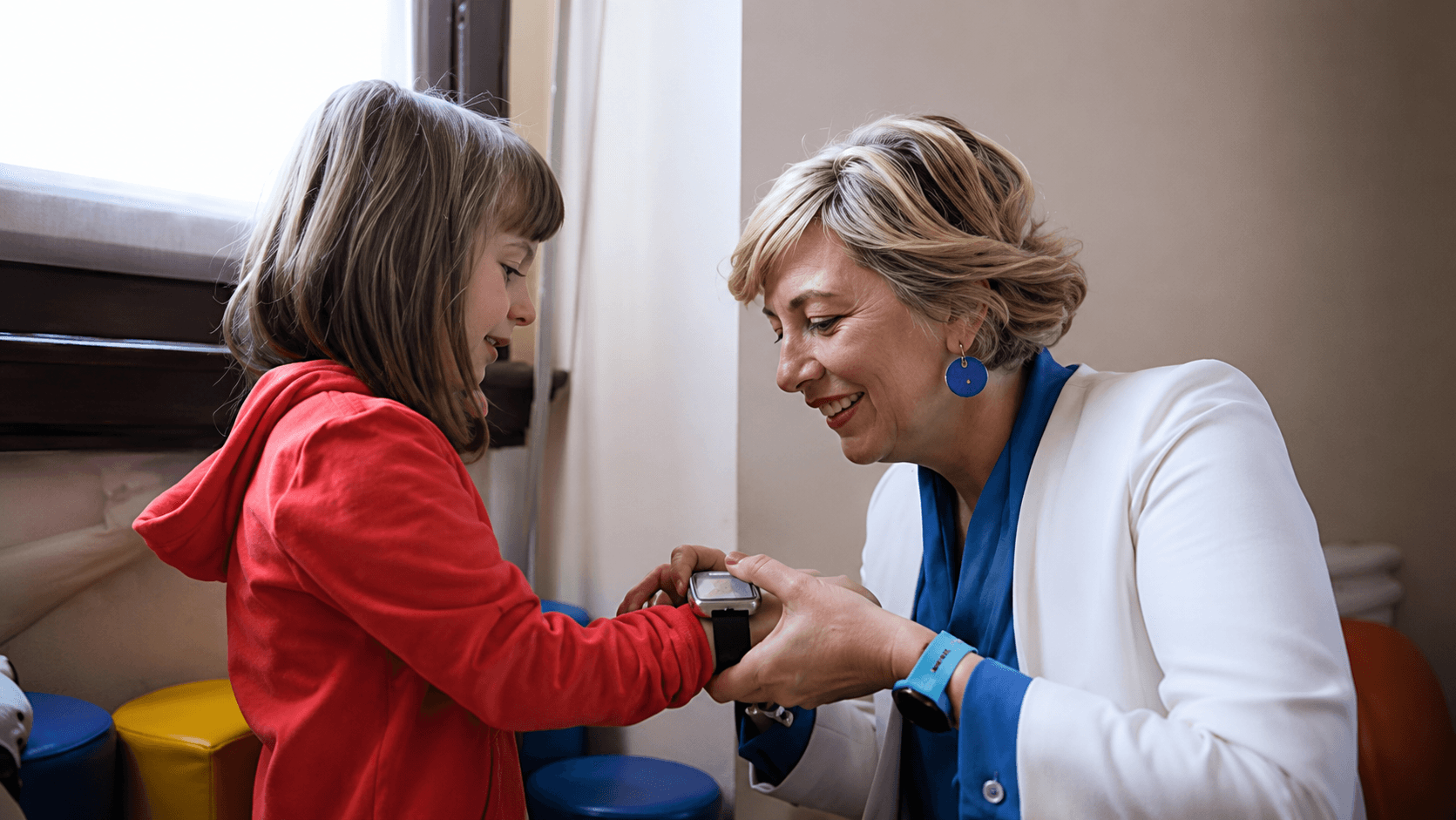
The first example of this approach is ABBI, Audio Bracelet for Blind Interaction: as reported by Pandora Rivista, it was developed together with rehabilitation centres. ABBI produces a sound linked to body movement, allowing a blind or visually impaired child to better perceive how they move through space and, if the device is worn by several people, how others move as well.
The strength of ABBI lies in the simplicity of the experience. The sound is not a decorative addition, but information that accompanies the gesture. The same logic returns in iReach, a system for early intervention in children with visual impairments. The device combines a bracelet with a speaker and vibration motor with a wireless reference unit. Sound and vibration vary according to distance, guiding the child towards an object or a part of the body. Once again, technology does not replace the relationship: it makes it more accessible.
This approach also enters schools and rehabilitation contexts. With the European project weDRAW, mathematics is explored through hearing and movement, as well as through sight. With CLIMB, meanwhile, a multisensory climbing wall installed at the Gaslini Hospital in Genoa helps children with the effects of stroke carry out rehabilitation exercises in a more active way.
Italy as a centre of excellence in inclusive neurological research
Monica Gori’s projects also speak to the quality of an ecosystem. Behind the devices are research institutes, hospitals, rehabilitation centres, universities and technological expertise working in a connected way. The pathway between IIT, Gaslini, the Mondino Institute in Pavia and local organisations shows how inclusive neurological research needs places where the laboratory can engage with clinics and schools.
For EdTech, MedTech and assistive technologies, this supply chain is significant because it shows that innovation is born from the ability to translate: from scientific data to prototype, from prototype to real-life context, from user experience to the improvement of the tool. It is a patient process, in which technological value is also measured by the possibility of being understood, adopted and shared.
RAISE, Robotics and AI for Socio-economic Empowerment, also fits into this framework: an ecosystem funded by the PNRR that develops inclusive systems for mobility and education through artificial intelligence and multisensoriality. What is at stake goes beyond the individual device: it concerns access to education, rehabilitation and broader opportunities for autonomy.
The global reach of Italian science
Monica Gori’s story speaks of Italian excellence made of expertise, vision and the ability to transform ideas into real solutions. It is the same capacity to take invention beyond the laboratory that also emerges in the story of Federico Faggin and the microchip, another example of Italian research able to engage with the world. This is precisely the know-how that OpportunItaly supports around the world: the internationalisation programme that helps Italian companies and professionals in the most innovative sectors — from EdTech to MedTech and assistive technologies — gain visibility beyond national borders and build new growth opportunities. If your organisation also combines research, innovation and social impact, join the programme and discover how to bring your excellence to international markets.
Sources:
Pandora Rivista, interview with Monica Gori
Frontiers in Psychology, study on iReach, 2025
Vanity Fair Italia, profile of Monica Gori
In brief
Monica Gori is a neuroscientist at the Italian Institute of Technology (IIT) in Genoa, where she heads the U-VIP unit dedicated to people with visual impairments; she has been working on these topics since 2002.
When a sense is missing, the others do not automatically become stronger; in the first years of life, sight organises the perception of space by connecting hearing, touch and movement.
Her research has led to concrete multisensory technologies, such as the ABBI sound bracelet, the new iReach device, the CLIMB rehabilitation wall at Gaslini Hospital and the tools for inclusive mathematics developed through the weDRAW project.
Each solution combines neuroscientific foundations with user-centred design developed together with doctors, therapists and families.
Monica Gori’s work is part of an Italian network of institutes and hospitals (IIT, Mondino in Pavia, Gaslini) and initiatives such as RAISE, funded by the PNRR, with the support of European funds such as ERC and Horizon.
The technologies are designed to support human relationships, not replace them, promoting inclusion at school, in rehabilitation and through play.
FAQ