



OpportunItaly at Web Summit Vancouver 2026: Italian tech meets global markets
At the fair, considered North America’s most anticipated technology event, 25,000 delegates and 750 startups took part.
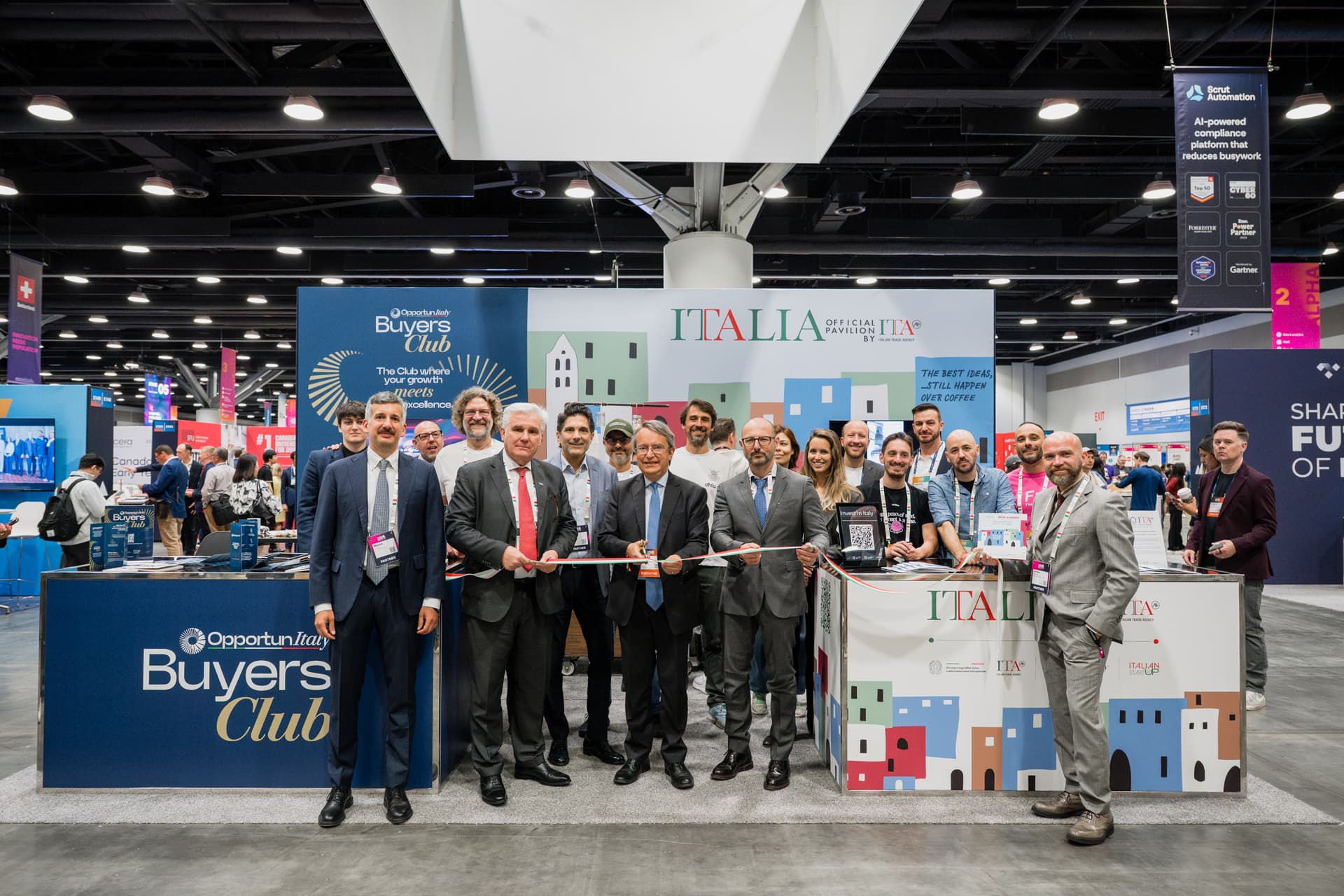
The Web Summit Vancouver 2026 was one of North America’s most anticipated technology events, an international meeting point for innovation, investment and the development of digital ecosystems. The event, held from 11 to 14 May at the Vancouver Convention Centre, brought together ICT operators, startups, investors and innovation stakeholders, offering a space for dialogue between markets, expertise and new business opportunities.
In this article, we will look at the most important figures from the event, the Italian presence, the role of OpportunItaly and the data confirming the strength of Italian technology.
From companies to participating startups: the numbers of Web Summit Vancouver 2026
Web Summit Vancouver 2026 confirmed its role as an international stage for the technology sector. This edition brought together 25,000 delegates, 600 investors, 750 startups and hundreds of speakers, creating a high-value environment for ICT companies, innovation ecosystems and financial operators.
These figures make the event particularly relevant for those looking at North America as a market for development, collaboration and investment. For Italy, being present in a context of this scale meant strengthening the visibility of its technology ecosystem and presenting, to an international audience, a dimension of Made in Italy that is increasingly linked to digital technology, research, advanced services and innovation.
Participation in the event therefore represented a concrete opportunity to enhance the potential of Italian companies and position the country as a prestigious interlocutor in global technology markets.
The Italian participation and the Official Italian Pavilion
The meeting point between Italy and the international market was the Official Italian Pavilion, inaugurated on 12 May at 11:00, in the presence of the Consulate General of Italy in Vancouver, the press and sector operators.
The space then hosted a delegation of 7 innovative Italian startups and SMEs, selected to represent the country’s ability to contribute to the evolution of global technology.
From artificial intelligence and blockchain to data analysis, sport-tech and market intelligence, the areas of activity of the Italian companies showcased a broad range of knowledge and expertise. The value of the participation was not linked to the promotion of individual companies, but rather to the representation of a structured ecosystem, capable of expressing vertical skills and solutions applicable to international markets.
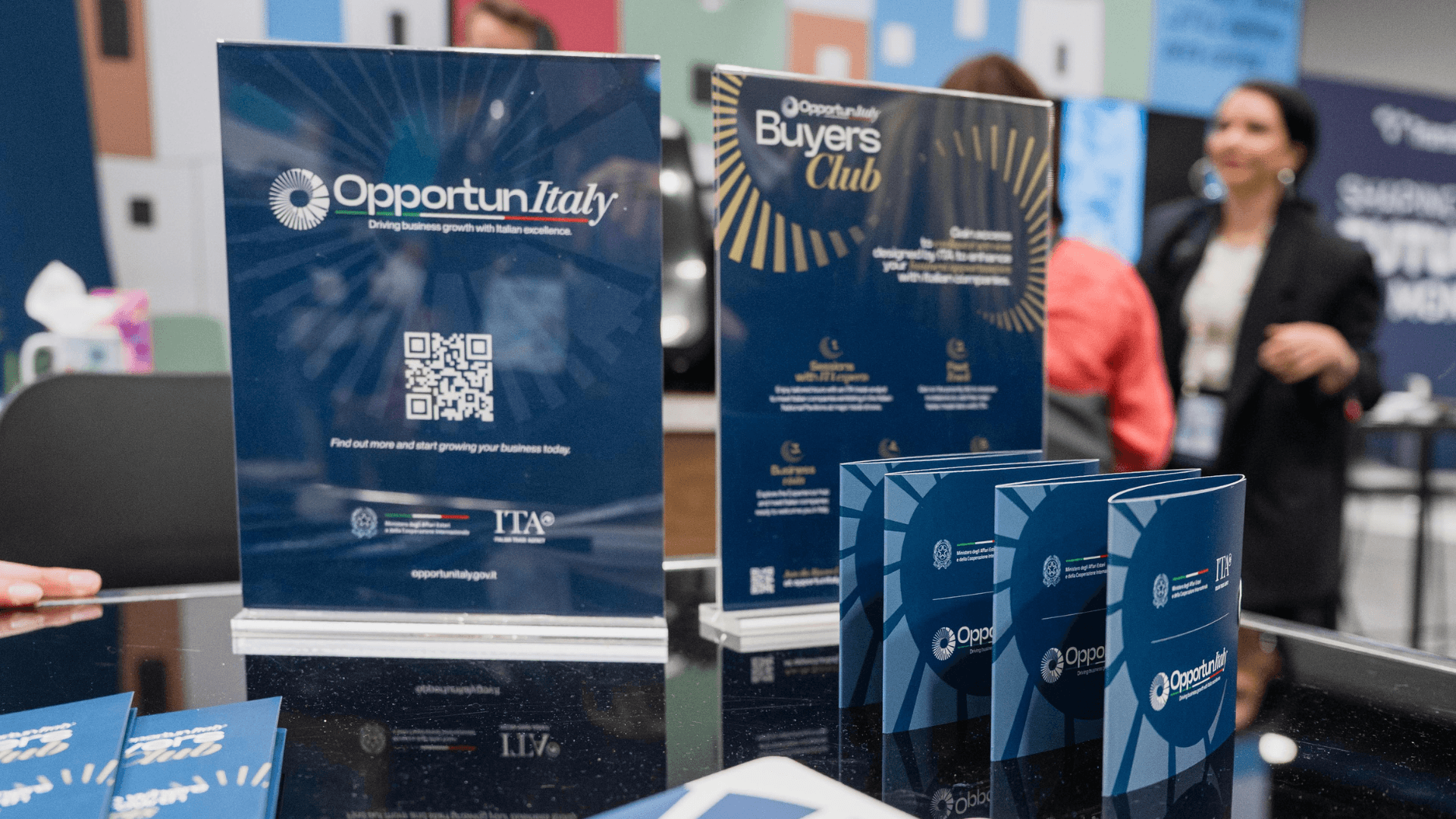
OpportunItaly alongside companies
To support the international promotion of the Made in Italy industry, OpportunItaly accompanied the Italian companies present through its dedicated space, giving international stakeholders the opportunity to discover dedicated services and business opportunities with Italy.
The campaign therefore served as a point of orientation to connect supply and demand, allowing interested parties to better understand the possibilities for synergy with the national production ecosystem.
Through its presence, OpportunItaly also strengthened a broader narrative of Italy: not only a country recognised for design, fashion, culinary culture and wine, but also a producer and exporter of technology. This perspective enhances the strategic sectors of Made in Italy and shows how innovation and internationalisation are now an integral part of Italian competitiveness.
The activities of Italian institutions
Alongside the OpportunItaly space, the pavilion also hosted an FDI desk dedicated to foreign investment, designed to present investment opportunities in Italy. This presence completed the story of Italian participation: on the one hand, the promotion of skills and companies in foreign markets; on the other, the positioning of Italy as a destination for investment and technological collaboration.
The importance of the Italian presence in Canada and at the event was also highlighted by Carlo Angelo Bocchi, Director of the ITA – Italian Trade Agency offices in Canada: “Our mission is driven by our determination to promote Italian technology in order to create opportunities for collaboration between Italian and Canadian counterparts, including in the world of startups and SMEs. The latest year’s figures, with 8 billion Canadian dollars in investments and 358 million in exits, confirm the direction taken by the financial and VC market. Most Canadian businesspeople know Italian design, fashion, culinary culture and fine wines, and an increasing number are aware that Italy is one of the leading producers and exporters of technology. The moment between Italy and Canada is truly favourable, with record sales of Italian products: 13.6 billion Canadian dollars, the best figure of the last five years”.
Alongside the event, ITA – Italian Trade Agency and KPMG Canada, under the auspices of the Consulate General of Italy in Vancouver, organised a meeting dedicated to industrial cooperation and investment in the ICT and innovation sectors. The event, entitled The Italy-Canada Strategic Session: Advancing Bilateral Innovation, was held on 12 May 2026, from 17:00 to 19:00. The programme included presentations and discussions with investors, helping to strengthen dialogue between the Italian and Canadian ecosystems.
These activities made the Italian presence more complete, combining exhibition, networking, institutional promotion and guidance tools for those looking at Italy as a technological and commercial partner.
Italian technology data
Italy’s presence at Web Summit Vancouver 2026 took place within a solid national framework. Italy ranks 5th in Europe and 11th globally for the number of patent applications filed in 2024, with over 10,000 applications. Milan also confirms its position as the country’s most innovative city, ranking 16th in the European classification.
In 2025, the Italian ICT sector reached a value of more than €84.2 billion, equal to approximately 132 billion Canadian dollars. The sector is growing at a faster pace than the national economy as a whole, with an estimated annual growth rate of between 2.8% and 3.2% through to the end of 2026.
There are around 110,000-120,000 companies operating in the ICT sector in Italy, more than 90% of which are small and medium-sized enterprises. The sector employs more than 650,000 people and is characterised by a widespread presence of specialised companies, particularly in software services and IT consulting.
In relation to Canada, Italy’s total exports reached around 7.15 billion dollars in 2025. Within this trade context, the “Electrical and Electronic Equipment” category, which includes hardware components and ICT infrastructure, accounted for approximately 434 million dollars, confirming itself among the top five export sectors.
Italian companies around the world thanks to OpportunItaly
These figures confirm the strategic value of initiatives such as the one carried out in Vancouver. Through OpportunItaly, Italy was able to strengthen its presence in a qualified international context, promoting its technology ecosystem and creating new connections between companies, investors and global operators.
The setting represented a major showcase for the participating companies and a valuable meeting point for all entrepreneurs interested in integrating Italian know-how into their business. OpportunItaly supports this type of connection through targeted services such as the Buyers’ Club, designed for foreign buyers, importers and distributors, with the aim of stimulating the development of commercial connections with the main players of Made in Italy excellence. Join the programme and discover all the services now.
Source:
ITA – Italian Trade Agency
In summary
Web Summit Vancouver 2026 brought together 25,000 delegates, 600 investors, 750 startups and hundreds of speakers, confirming its position among North America’s most relevant tech events.
The Italian presence developed through the Official Italian Pavilion and the startup island, with a delegation of innovative startups and SMEs from the ICT sector.
OpportunItaly played a central role in providing information and support to operators interested in exploring business opportunities with Italy.
Italian institutions promoted networking, industrial cooperation, investment and dialogue between the Italian and Canadian ecosystems.
The Italian ICT sector is worth more than €84.2 billion, counts up to 120,000 companies and employs more than 650,000 people.
FAQ