



From rivers to the sea: the Italian innovation transforming the oceans
80% of marine plastic comes from rivers, which is why a Florentine start-up has shifted the focus of ocean protection to inland waters
Marine pollution does not start on the beach: it begins in rivers, cities, production systems and the everyday choices that determine how much plastic will eventually reach open waters. For this reason, some in Italy have chosen to focus on inland waters. To protect the sea, it is essential to act at the source of the problem: this insight gave rise to the idea of a Florentine start-up that has integrated technology and AI into waste monitoring and recovery processes.
Why rivers are key: 80% of marine plastic comes from land
Cleaning the seas does not necessarily begin in the heart of the ocean. A decisive part of the challenge takes place along inland waterways, which can become channels that transport waste towards the marine environment.
According to the study “Stemming plastic pollution to protect the ocean”, published in 2025 by the Organisation for Economic Co-operation and Development, rivers carried 1.4 tonnes of waste into the sea in 2020, while 3.6 million tonnes are expected by 2060.
Acting on water basins therefore means intervening before plastic reaches the sea, making recovery more manageable and closer to urban collection systems. Ocean protection also depends on local infrastructure, with environmental monitoring and waste management across local areas playing a fundamental role in caring for marine habitats.
Italian innovation for ocean cleaning: AI and automated river barriers
From this insight comes a Florentine start-up that stands out for its innovations in ocean cleaning. As reported by intoscana, the company has developed a system to intercept river waste before it ends up in the sea.
The system is installed within the watercourse and uses a floating barrier to intercept floating waste. The materials are then directed towards one bank, extracted through conveyor belts and deposited in an unloadable container, similar to an industrial waste bin.
This approach brings river waste closer to ordinary urban waste management. In other words, the technology does not simply collect plastic, but aims to place it within a process that is more organised, traceable and manageable for local communities.
How the technology works: from monitoring to waste recovery
This Made in Italy system combines physical recovery and digital monitoring. Alongside the floating barrier and conveyor belts, there is an analysis tool based on computer vision, designed to identify and classify floating waste automatically.
Data collection takes place through high-resolution cameras that record images and send them to a cloud server. There, a trained neural network analyses the content and distinguishes plastic from organic matter.
Data therefore becomes part of the solution. Knowing how much waste is transported by rivers, where it accumulates and how often makes it possible to design more targeted interventions. For start-ups, cleantech SMEs and environmental stakeholders, this approach shows how artificial intelligence can be applied to concrete environmental goals, not replacing local management but strengthening it.
The plastic emergency in the oceans: the numbers
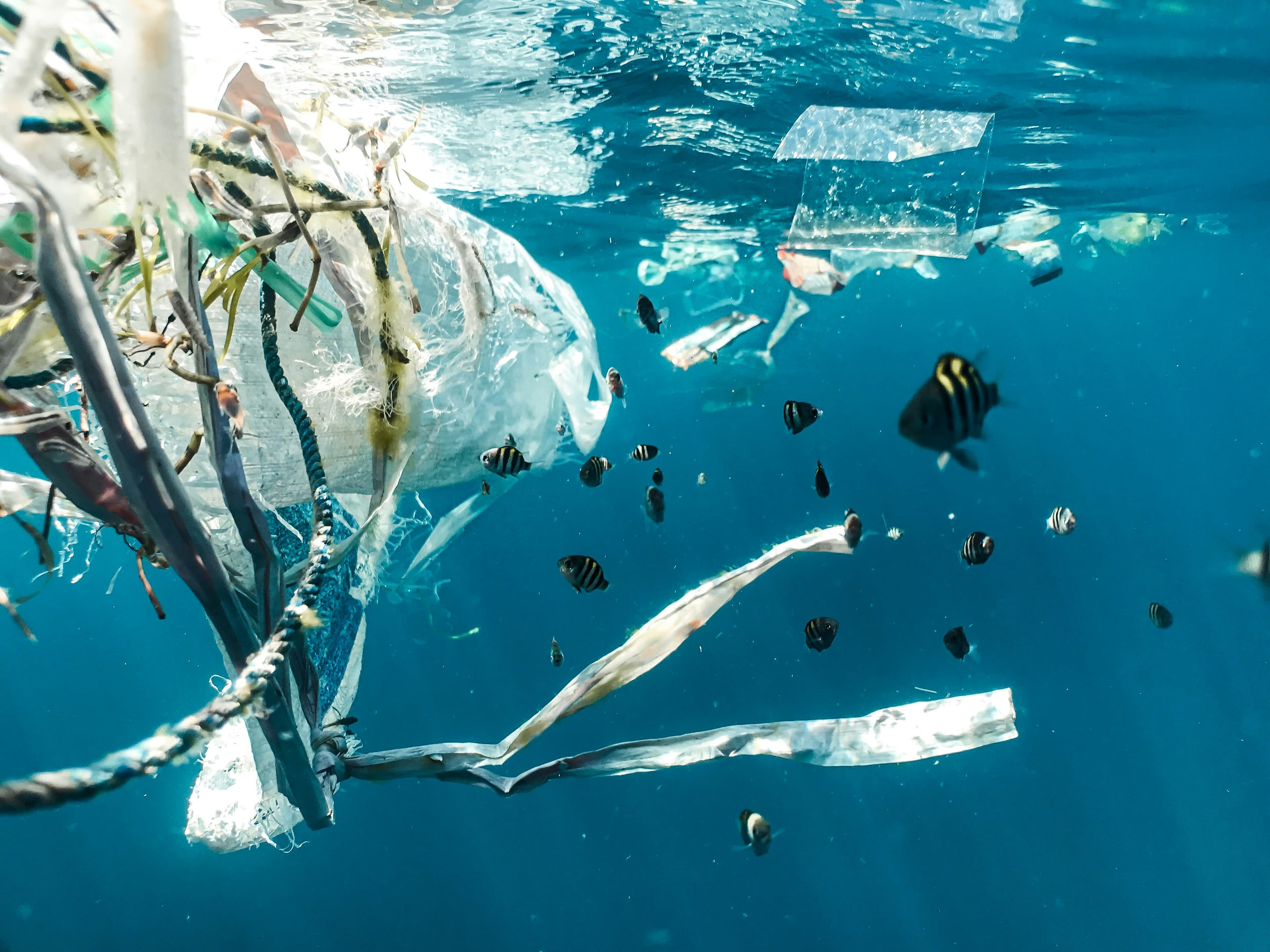
The issue of plastic in the oceans is one of the most relevant when discussing sea protection. As reported in the study “Plastics the Fast Facts 2025”, produced by PlasticsEurope, global plastic production has grown exponentially: from 311 million tonnes in 2014 to over 430 million tonnes in 2024.
These significant figures invite reflection on production processes and the raw materials used. In the oceans, there are already islands formed by waste accumulated and carried offshore by currents, while in other parts of the world the survival of communities is at risk.
Indeed, three billion people depend on the sea for their livelihoods, as reported in the OECD study “The Ocean Economy to 2050”, with a value generated in 2020 of 2.6 trillion dollars, expected to rise to 5.1 trillion by 2050, according to a study by the World Economic Forum in collaboration with McKinsey.
These figures show why ocean cleaning cannot be approached only as an after-the-fact recovery activity. A broader strategy is needed, one capable of combining prevention, collection, environmental education, tracking technologies and collaboration between the public and private sectors.
World Oceans Day: origins and purpose
With the aim of raising awareness of the importance of the relationship between humanity and the sea, World Oceans Day was established in 1992 during the Rio de Janeiro Earth Summit. The observance was then officially recognised by the United Nations in 2009 and is celebrated every year on 8 June.
Its purpose is to raise awareness among citizens, institutions and businesses about the importance of marine ecosystemsand the need to protect them. It is not just a symbolic day: it is an opportunity to reflect on consumption models, waste management, biodiversity protection and technologies capable of reducing human impact.
For the world of cleantech SMEs and start-ups, the observance also represents a valuable moment to read sustainability as a field of innovation. Protecting the oceans means intervening in production processes, transforming environmental awareness into operational solutions.
The future of ocean protection: Italy’s contribution
Ocean protection requires a combination of awareness, technologies and management capabilities. Among the future goals of the Florentine start-up are the optimisation of systems, serial production and the creation of a permanent national monitoring network to continuously study the phenomenon of river waste.
This scenario is relevant for those observing
Italy’s strategic sectors, because it shows how sustainability, data and environmental technologies can converge in scalable solutions. World Oceans Day reminds us that protecting the sea is not a distant issue: it concerns businesses, local areas, cities and supply chains.
Italy can contribute with innovations capable of acting before dispersion occurs, transforming ocean cleaning into prevention, monitoring and waste management. It is a concrete direction for protecting the sea while also enhancing industrial and technological expertise oriented towards sustainability.
OpportunItaly promotes Italian innovation for ocean protection
World Oceans Day, celebrated every year on 8 June, draws attention to the need to protect the oceans from increasingly urgent threats, including plastic dispersion. Today, the experience and know-how of professionals are complemented by new technologies and artificial intelligence, which make it possible to take environmental protection to another level.
OpportunItaly promotes this type of expertise by encouraging dialogue between Italian companies, international stakeholders and strategic sectors linked to sustainability. For cleantech SMEs and start-ups, ocean protection is not only an environmental challenge: it is also an area of development, collaboration and growth in global markets. To discover how to accelerate your business with OpportunItaly, join the programme.
Sources:
Plastics the Fast Facts 2025
OECD – The Ocean Economy to 2050
Stemming plastic pollution to protect the ocean
World Economic Forum, McKinsey
intoscana
In summary
World Oceans Day is celebrated every year on 8 June. The observance was created in 1992 at the Rio de Janeiro Earth Summit and was officially recognised by the United Nations in 2009.
Ocean protection begins with rivers. According to the OECD study “Stemming plastic pollution to protect the ocean”, rivers carried 1.4 tonnes of waste into the sea in 2020, while 3.6 million tonnes are expected by 2060.
Italian innovation focuses on prevention. As reported by intoscana, a Florentine start-up has developed a system to intercept river waste before it ends up in the sea, using floating barriers, conveyor belts and collection systems.
Digital monitoring makes interventions more targeted. The system integrates high-resolution cameras, a cloud server and a trained neural network to distinguish plastic from organic matter, turning data into an environmental management tool.
Global plastic production continues to grow. As reported in PlasticsEurope’s “Plastics the Fast Facts 2025”, global production rose from 311 million tonnes in 2014 to over 430 million tonnes in 2024.
FAQ