



The Murgia District: excellence in upholstered furniture from Southern Italy to the global market
The "upholstered furniture triangle" is Italy's leading industrial hub, with more than 600 companies and over 9,200 workers shaping the quality of Made in Italy every day, recognized around the world
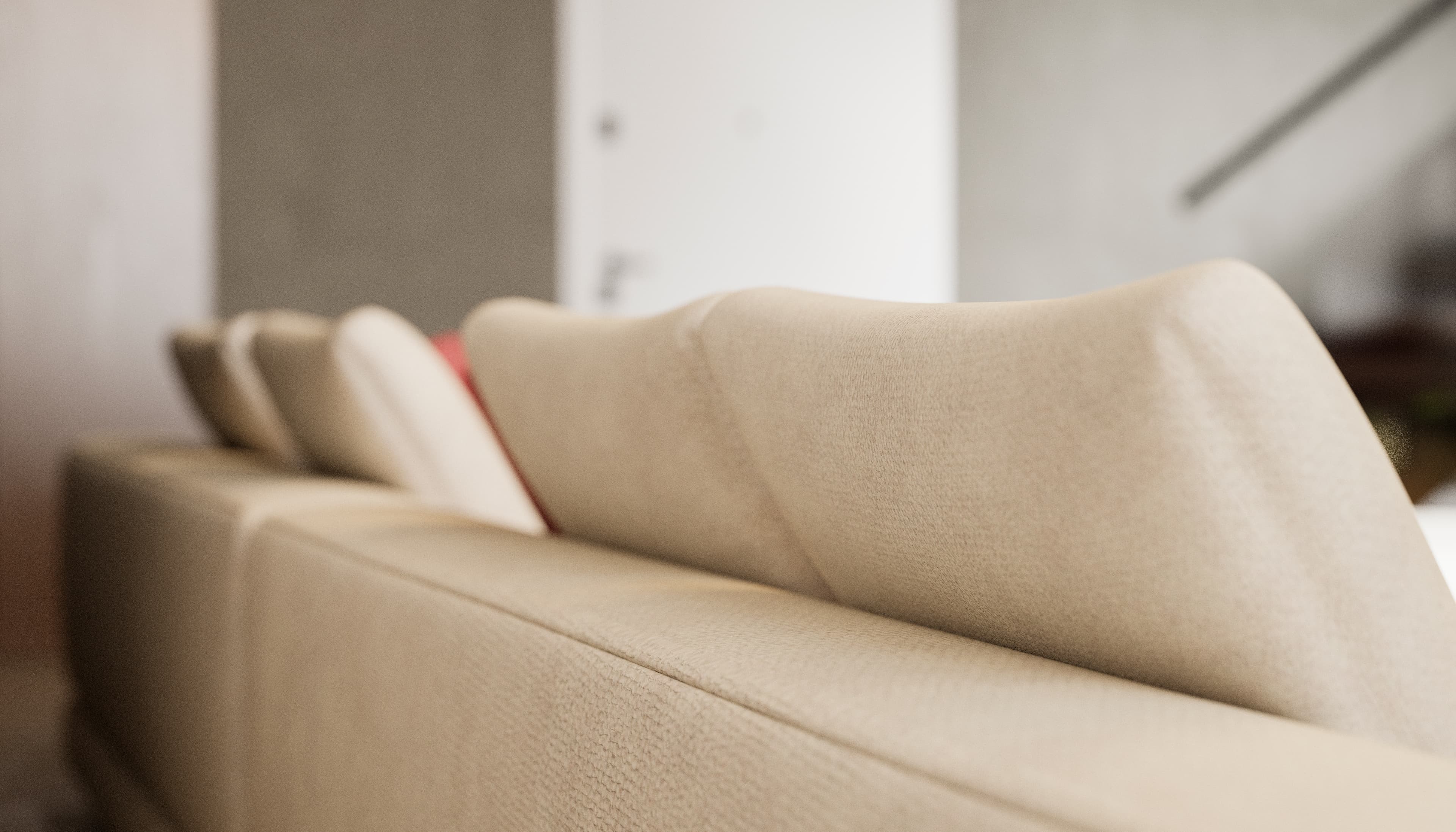
On the plateau between Puglia and Basilicata, among olive groves and ancient stone farmhouses, the industrial heart of Italy's sofa manufacturing industry has been beating for more than half a century. As of the second quarter of 2025, the Murgia upholstered furniture district includes 611 active companies—493 in Puglia and 118 in Basilicata—making it the country's largest production hub in this sector, ahead of Lombardy, Tuscany, Emilia-Romagna, and Veneto.
A figure that, on its own, tells the story of a region capable of transforming the artisanal craftsmanship of wood and textiles into a true industrial supply chain, recognized worldwide in the furniture industry as an expression of Made in Italy.
What is the Murgia upholstered furniture district?
The Murgia upholstered furniture district emerged between the 1970s and 1980s, when deep-rooted upholstery craftsmanship began to intertwine with mass-production processes. This marked the moment when sofa manufacturing evolved from a niche craft into a full-fledged industry, capable of generating employment across the region.
Geographically, two-thirds of the industry is concentrated in what operators call the "upholstery triangle": the municipalities of Altamura, with 192 companies; Matera, with 103; and Santeramo in Colle, with 62. From this core area, the production network extends throughout the heart of the two regions.
Alongside the sofa manufacturers, the district is home to numerous complementary wood furniture companies: 713 manufacturers of furniture and interior design solutions, 62 mattress manufacturers, 48 kitchen specialists, 12 chair manufacturers, more than 39 companies specializing in finishing (lacquering, painting, upholstery), and 31 manufacturers of parts and accessories. An ecosystem that, while centered on sofa manufacturing, brings together a wide range of expertise, much like the Arezzo Gold District, and stands out from other Italian wood furniture hubs for its industrial scale and geographic concentration.

Manufacturers and companies: inside Italy's leading sofa manufacturing district
In absolute numbers, Puglia and Basilicata are now home to one-quarter of all Italian companies in the sector. According to INPS data, the district employs 9,214 workers, equal to 41% of the national workforce in the sector.
The Murgia sofa manufacturing supply chain revolves around a small number of large companies, supported by an extensive subcontracting network made up of 238 small businesses and 344 specialized microenterprises.
Another distinguishing feature is the share of corporations, which account for 67% of the total, compared with regional averages ranging from 32% to 35% across the rest of Italy. Compared with other national manufacturing hubs, the Murgia district occupies a distinct position: Brianza, concentrated in the Monza area with 269 companies, focuses on design and the high end of the market, while the Forlì-Cesena district, with 215 companies, specializes in the mid-to-high-end market, including third-party manufacturing. Veneto, split between Padua and Treviso, combines large corporate groups with flexible SMEs, while Tuscany, centered around Pistoia, remains rooted in high-quality craftsmanship. Within this landscape, the Murgia District leads in production volume and number of companies, while remaining less focused on the higher-priced market segments.
From industrial crisis to resilience: twenty years of transformation
However, the district has not always had an easy path. During the 1990s, the sector experienced a period of major expansion, growing to nearly 1,000 companies—982 in 2000—and approximately 15,000 employees. Its success was driven by a business model based on competitive pricing and high production volumes.
The turning point came in the 2000s and became particularly severe between 2007 and 2009 with the onset of the global economic crisis. A restructuring process led to the loss of more than one-third of the companies and jobs within just a few years. The main challenge during this period was competition from foreign upholstered furniture manufacturers, which were able to offer lower-quality products at lower prices.
The district emerged from this period leaner, but also stronger. Comparing the second quarter of 2025 with the same period in 2020, the number of companies declined by 11.9%, while employment increased by 12%—an increase of nearly 1,000 jobs. The provinces of Bari and Barletta-Andria-Trani continue to drive this growth, with 642 additional workers.
Public investment also played a key role in this recovery, through funding allocated to safeguard businesses and support the reemployment of workers. At the same time, several companies with their own brands began developing product lines for higher-end market segments, investing in automation and the digitalization of the most critical production stages while integrating new technologies into traditional manufacturing.
Exports and international markets: opportunities and challenges
This transformation of the sector has not slowed its momentum in the global market. Global demand for sofas continues to grow, at an estimated annual rate of more than 4%. According to ISTAT, Italy generated €1.7 billion in exports in 2024. Of this, the Puglia-Basilicata district alone accounted for €411 million, including €343 million—82% of the total—generated by companies in the provinces of Bari and Barletta-Andria-Trani.
The overall trend in recent years has been positive, with 2024 showing a 14% increase compared with 2020, although the past two years have seen a renewed slowdown, in line with the national trend. The United States remains the leading export market, with €120 million in exports and growth of 68.5% compared with 2020. It is followed by France (€54 million), the United Kingdom (€51 million), Belgium (€22 million), and Canada (€12 million).
The future: from industrial scale to accessible, sustainable quality
The Murgia District is not simply preserving the industrial expertise it has built over half a century; it is reshaping it to meet increasingly demanding international market needs. The goal is to create products that combine design, functionality, and sustainability without entering the luxury market, while maintaining a level of quality well above low-cost alternatives.
Sustainability is expected to play a central role in this transition. According to Persistence Market Research, 72% of European consumers consider it a key purchasing factor, with growing interest in eco-friendly materials such as cork, coconut fiber, grape pomace, and recycled materials, including PET made from high-quality recycled plastic.
This is an area where the district can build on expertise already developed elsewhere in Italy in the field of biomaterials, applying it to sofa manufacturing. Product innovation is also being driven by the integration of new technologies and the modernization of sales channels, including e-commerce, virtual product demonstrations, and a stronger position in the contract market, from hotels to public spaces. At the same time, the challenge of internationalization remains: consolidating established markets in Europe and North America while capturing growing demand in the Asia-Pacific region and the Gulf countries.
How to connect with companies in the Murgia District through OpportunItaly
The Murgia District is a tangible example of how Italian manufacturing expertise can reinvent itself without losing its identity. OpportunItaly was created to support companies such as those leading the upholstered furniture sector in expanding into international markets, connecting the know-how of local areas and industrial districts, discoverable through the District Map, with global opportunities. Join the programme and discover how to collaborate with the companies that make Made in Italy a global benchmark.
Source:
Unioncamere Puglia
ISTAT
Commissione Europea
INPS
In summary
The Murgia District is Italy's leading upholstered furniture manufacturing hub, with 611 companies and more than 9,200 employees, representing one of the country's most important Made in Italy sofa manufacturing supply chains.
Born from the combination of artisanal tradition and industrial development, the district spans Puglia and Basilicata, with the "upholstered furniture triangle" of Altamura, Matera, and Santeramo in Colle serving as the industry's production core.
Its strength lies in a complete supply chain that brings together large companies, SMEs, and businesses specializing in complementary manufacturing processes, making the region a national benchmark for sofa and furniture production.
Following the challenges of the 2000s, the district began a transformation focused on quality, innovation, automation, and digitalization, strengthening its competitiveness in international markets.
Today, the Murgia District is looking to the future by focusing on sustainability, new materials, digital channels, and export growth, with development opportunities particularly in the European, North American, Asian, and Gulf markets.
FAQ